

Leap Beyond the White Paper: How Smart B2B Marketers Are Bypassing the Top‑of‑Funnel Trap
We all know that B2B lead generation has changed during the past few years. Many sales teams report that it has become more difficult than ever to reach prospects, and inbound leads, particularly early-stage leads from white papers, for example.
Sales funnels have evolved from simple, linear flows where it was possible to move people predictably – and efficiently – from top to middle to bottom of funnel. Today, they’re more complex and circuitous, defined by stops and starts and multiple teams of decision-makers.
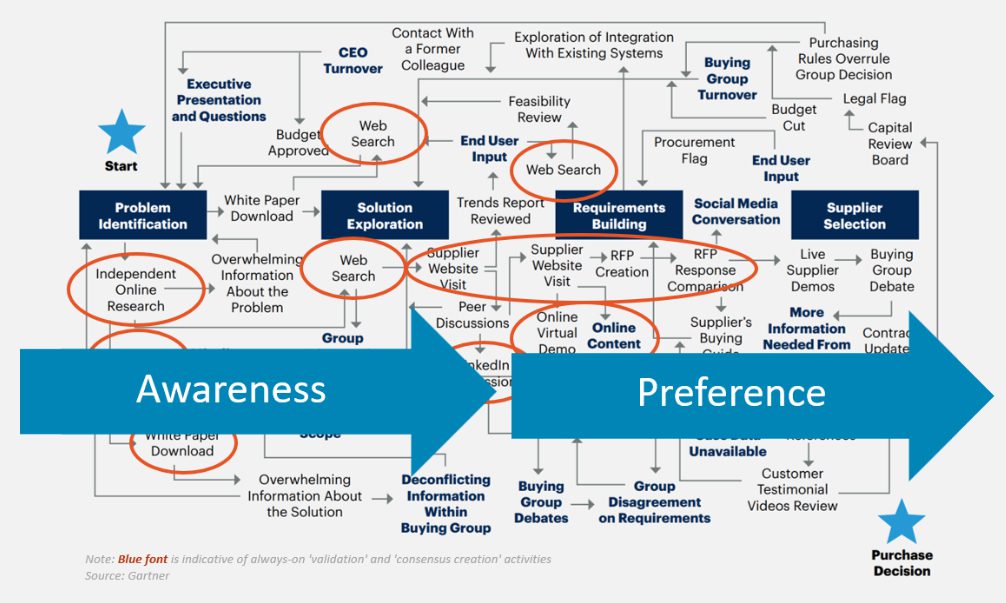
In fact, B2B marketing has long relied on the top of the funnel (TOFU) as its comfort zone. For decades, marketers have poured time and money into white papers and gated eBooks, hoping to draw in buyers early in their journeys. But here’s the hard truth: most of these “leads” aren’t actually leads at all, and they’re certainly not sales ready.
They’re researchers. They’re tire-kickers without authority. Occasionally, they’re a decision-maker without budget who’s months—if not years—away from a purchase.
Today’s sales leaders don’t need more of these names in the CRM—they need a qualified pipeline. Today’s sales leaders don’t need more of these names in their CRMs – they need meetings, quotes and opportunities.
Yet, too many marketing teams still get judged on how many top-of-funnel conversions they can drive. At GGC, we’re no longer even reporting on outdated terms such as MQL (Marketing Qualified Leads) or even SQL (Sales Qualified Leads), yielding in favor of meetings, quotes and opportunity measured in dollar value. Clearly, it’s time to rethink the top-of-funnel (TOFU) model.
The Problem With TOFU Cost in Today’s Market
TOFU leads are expensive to capture, hard to contact and slow to convert. Simply put, they cost a lot of money, not really to generate, but for sales teams to convert. There’s far too much friction and roadblocks to conversion today that add cost to these leads in ways that didn’t exist a few years ago.
These early-stage leads introduce inefficiencies across your entire go-to-market engine. Sales teams waste time chasing ghosts who never return calls or open emails. Nurture programs burn resources over months with little to no measurable ROI. And while marketing attribution might look strong, it rarely translates into meaningful revenue.
This approach made more sense when marketing automation was novel and intent data was scarce. But in 2025, we have better technologies—and smarter strategies.
The Shift: Leapfrogging to Mid‑Funnel Buyers
Progressive B2B companies are shifting their spend and focus toward identifying and engaging prospects who are already in an active buying cycle. These are the middle-of-funnel (MOFU) buyers—the ones actually in the buying process! They’re already evaluating solutions, building business cases or comparing vendors.
Instead of casting a wide net with a content magnet, modern marketers are using tech stacks built for precision. At GGC, we use tools like ZoomInfo WebSights, ZoomInfo Search Intent and various “de-anonymizer” tools from ListenLayer and others that allow us to tap into behavioral and firmographic signals to uncover who’s really in-market.
Let’s Break It Down:
- ZoomInfo WebSights
ZoomInfo WebSights reveals which companies are visiting your website—even if they never fill out a form. With IP-to-company resolution, we can see which accounts are engaging with product pages, map visits to your CRM, and prioritize outreach based on real-time signals.
- Search Intent Data
ZoomInfo’s intent data (or providers like Bombora and G2) track company-level interest signals based on content consumption across the web. This lets us identify companies researching relevant topics and time our outreach immediately, right at the moment they’re searching for a solution.
- Deanonymization
ListenLayer, and to a certain extent ZoomInfo, doesn’t just identify the name of the domain – the old paradigm provided by lead sensing tools – but instead it identifies the visitor’s name, phone and WORK email address with great accuracy. Capturing a visit from a major company like Ford, Merck or ABB does little for a sales team. However, capturing the specific visitor’s contact information is the ultimate method for converting anonymous visitors into leads. Automatic email and outreach programs are in a unique and powerful position to engage just at the moment they’re searching for you as a solution. It’s an instant alert that helps you separate real buyer activity from casual browsing.
Real Pipeline Over Vanity Metrics
It’s not that TOFU content is worthless—it still plays a role in SEO, brand visibility and thought leadership. But it shouldn’t be the cornerstone of your lead gen focus or defining your value.
Marketers who build programs that prioritize mid-funnel engagement generate more sales-qualified leads that convert faster, more opportunities with shorter sales cycles, and better marketing-sourced revenue without inflating cost-per-lead metrics.
What This Looks Like in Practice
Here’s how forward-thinking B2B marketing teams are building this new model:
- We identify in-market accounts using intent and WebSights, custom intent and de-anonymizer data.
- Outreach campaigns are programmed and ready to go as they’re trigged by our instant alerts.
- Sales teams are routed with warm responses from people asking for meetings and more information.
The result? More pipeline, less noise and a marketing and sales engine that drives sales-ready opportunities—not just MQLs that don’t convert.
Final Thought
White papers play a role, but they are no longer the sales door-opener they once were. The leads they produce aren’t always wrong—but they’re too often early, uncertain and expensive to pursue.
By leapfrogging the top of the funnel to the middle, where you’re able to build campaigns that engage with buyers more likely to have budget and authority, B2B marketers can deliver more value, build better alignment with sales and prove true marketing ROI.
It’s not about lead gen or filling the funnel anymore—it’s about filling it with people who are ready to move.
Reach out to GGC to learn more about how we’re applying these new content and tech stack tools to close more and grow more for B2B marketers.